Where is Vanuatu?
When I explain this project to people in the United States, I often get the same two questions: “I’ve never heard of that country,” or “Where is that located?” So here’s some background.
Vanuatu is a small island nation in the South Pacific Ocean, approximately 1,750 kilometers (1,090 miles) east of Australia and 500 kilometers (310 miles) northeast of New Caledonia. The country is made up of more than 80 islands stretching across a volcanic archipelago, with a population of roughly 330,000 people.
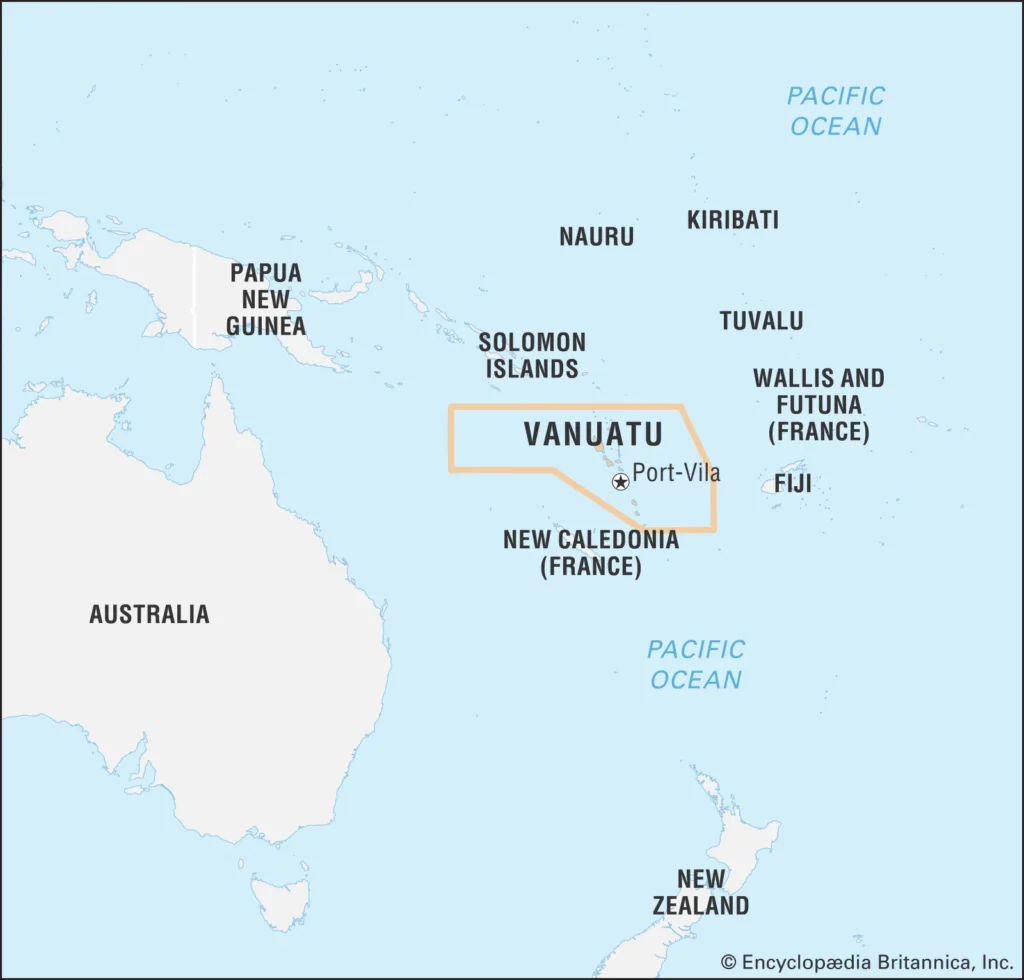
Vanuatu is also one of the most linguistically diverse countries in the world. More than 100 Indigenous languages are spoken across the islands, though Bislama is the national language of Vanuatu and one of its three official languages, alongside English and French.
The Bislama Language
Bislama is an English-based creole language that developed during the 19th century. Bislama emerged during the nineteenth century as a result of growing contact between Melanesian islanders and English-speaking traders, missionaries, and plantation owners. Thousands of people from what is now Vanuatu were recruited or coerced into working on plantations in places such as Queensland, Australia, and Fiji, where they encountered workers from many different language backgrounds. To communicate across these linguistic barriers, a simplified form of English developed and gradually evolved into Bislama. Over time, it absorbed influences from the Indigenous languages of Vanuatu and other Melanesian languages, developing its own distinct grammar, pronunciation, and vocabulary. Following Vanuatu’s independence in 1980, Bislama became an important symbol of national identity and remains the country’s most widely spoken language today.
Common phrases in Bislama:
“Gud moning” = Good morning
“Tankyu tumas” = Thank you very much
“Mi stap gud” = I am fine
“Wan, tu, tri” = One, two, three
A famous Bislama phrase is:
“Yumi stanap tugeta.”
“We stand together.”
The word “yumi” is especially useful because it means “you and I/we together” (inclusive “we”), a distinction that English does not make.
Today, Bislama is the language most commonly used for everyday communication across Vanuatu’s many islands and language communities. Since more than 100 Indigenous languages are spoken in the country, Bislama acts as a shared language that allows people from different regions to communicate easily.
Food and everyday life
For generations, ni-Vanuatu communities have relied on local food systems built around crops like taro, yam, cassava, sweet potato, bananas, and coconuts, along with fresh seafood. Today, imported foods, supermarkets, changing lifestyles, and rapid urban growth, especially in Port Vila, are reshaping the food environment in ways that raise important questions about nutrition, health, and cultural continuity.
These shifts are exactly what this project is focused on: how people navigate both traditional and modern food systems, and what that tells us about nutrition transition, food security, and cultural resilience in a place that is changing quickly. (CLICK HERE TO LEARN MORE)
Natural hazards and resilience
Vanuatu is one of the most disaster-prone countries in the world. Sitting along the Pacific Ring of Fire, it faces earthquakes, volcanic eruptions, tsunamis, landslides, droughts, and tropical cyclones. For a country where many people depend on farming and fishing, these events can disrupt food production, damage crops, cut off markets, and threaten livelihoods.
In Port Vila, the effects often show up through damaged infrastructure, rising food prices, and broken supply chains. At the same time, communities across Vanuatu have developed strong traditions of resilience and mutual support in response to these challenges. Understanding this context is essential to understanding the food environment.
Port Vila
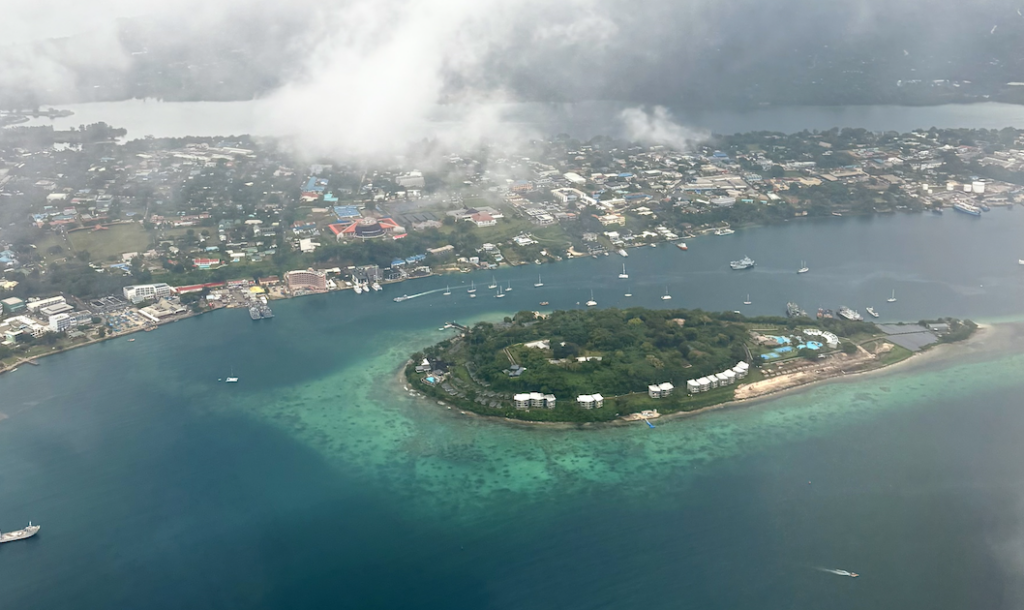
Port Vila, located on the island of Efate, is the country’s capital and its main urban center and is the focus of my research. Many ni-Vanuatu move to Port Vila from other islands in search of work, education, and healthcare, bringing their languages, traditions, and food practices with them. The result is a city that is both deeply ni-Vanuatu and constantly in flux.
Port Vila is also Vanuatu’s main gateway to the world. Bauerfield International Airport connects the country to Australia, New Zealand, and the wider Pacific, and tourism plays a significant role in the local economy. The city has also become increasingly international, and more broadly, has been attracting entrepreneurs, investors, aid organizations, and migrants from across the Pacific, Asia, and Europe. Chinese-owned businesses and enterprises from many other countries are now a visible part of the urban city.
All of this makes Port Vila a compelling place to study how global forces interact with local food traditions and what that means for the health and everyday lives of the people who live there.